
Temporary Exhibition
2026-2027
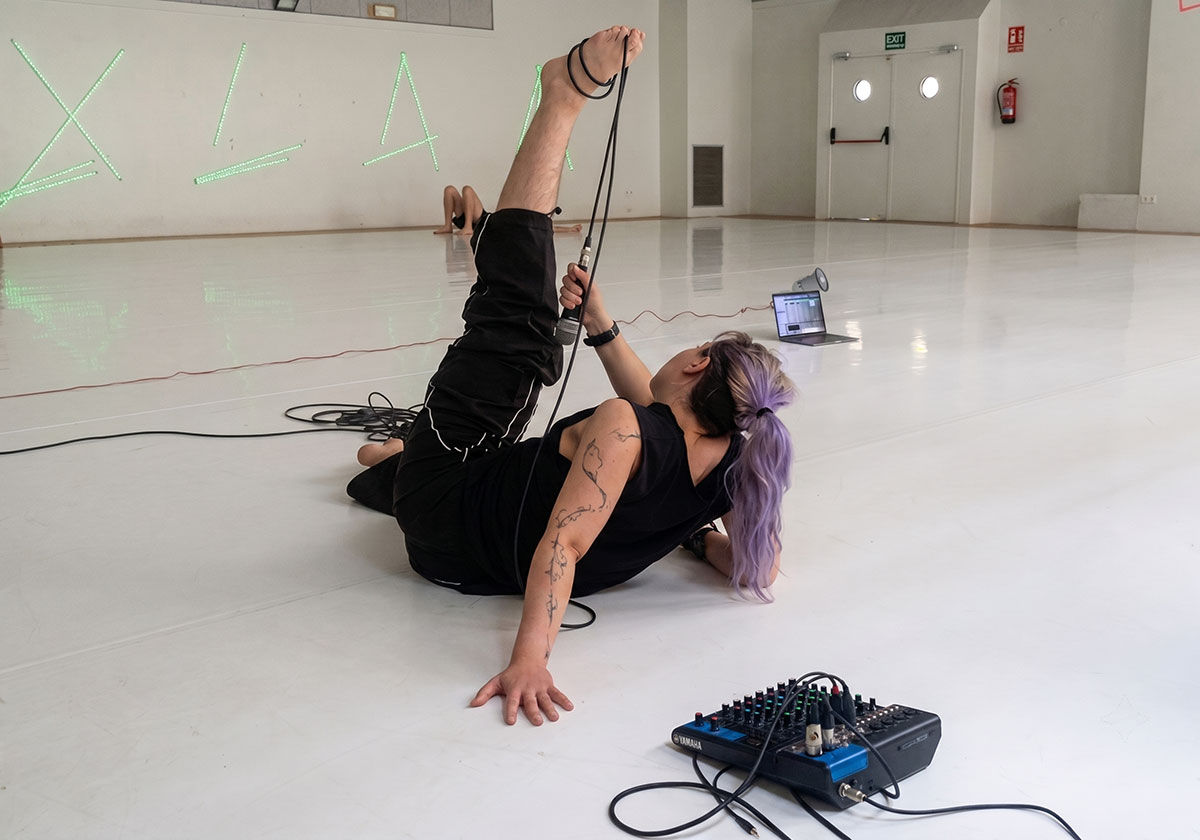
Temporary Exhibition is a performative research project conceived and performed by noela covelo velasco and Júlia Rúbies Subirós, in which sound and choreography are continuously redistributed. Through voice, movement, and technological mediation, the performative research project explores how memory, knowledge, and presence circulate between bodies, objects, and systems of transmission.
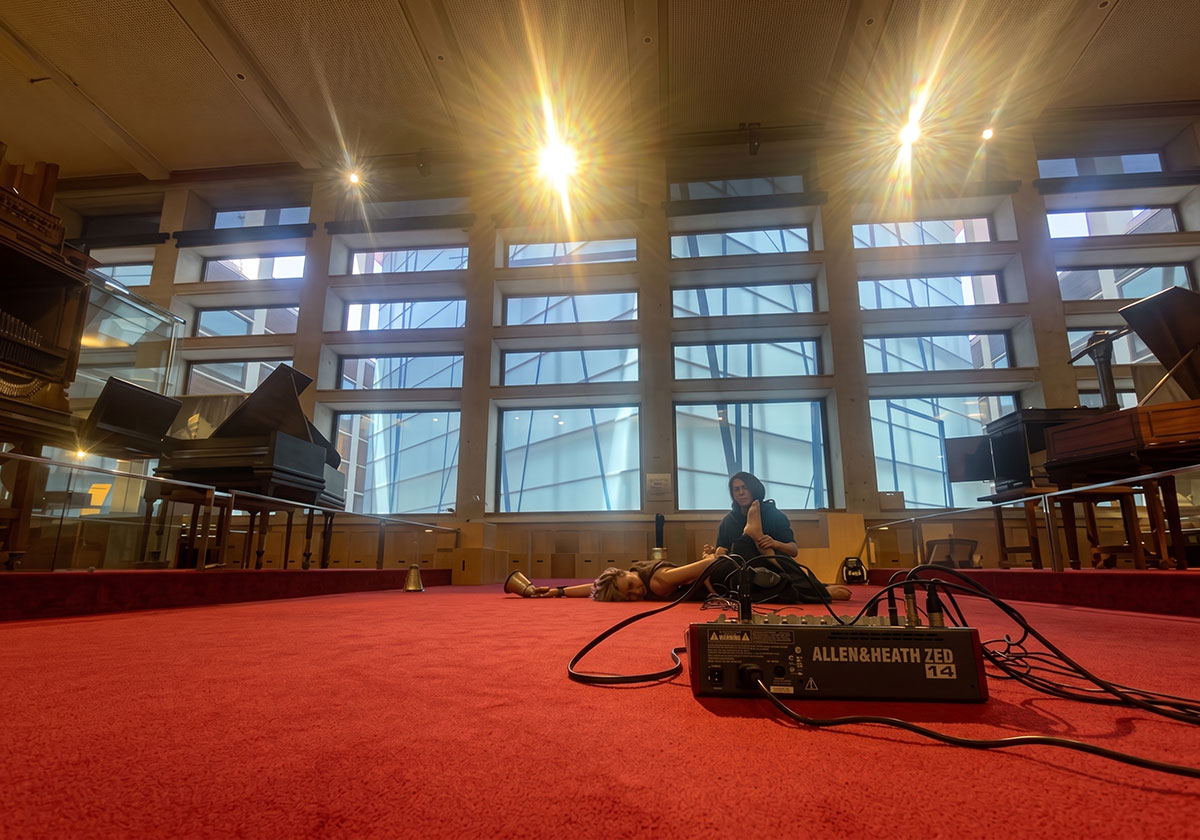
The title responds directly to the context in which the work was conceived: Time Regained, another temporary exhibition that had not yet opened at the Museu de la Música. By naming our research presentation as Temporary Exhibition, the presentation positions itself as a living exhibition within the museum, foregrounding its own ephemerality in relation to the institution's permanent collection. This juxtaposition of our bodies being conceived as time-based exhibits situated next to instruments are presented behind glass vitrines opens a reflection on the ways musical heritage is preserved, exhibited, and activated.
Context
Creació i Museus
The project was developed within Creació i Museus, a programme initiated by the Institut de Cultura de Barcelona (ICUB) that connects the city's museums with artistic residency centres to foster new artistic research. Invited by La Caldera, we developed the project in dialogue with the Museu de la Música de Barcelona and its temporary exhibition Time Regained.
Time Regained
Temporary Exhibition (our research project) was commissioned in response to Time Regained, a physical temporary exhibition at the Museu de la Música de Barcelona, yet to arrive to the museum by the time of our sharing. The exhibition invited Graindelavoix (an Antwerp-based music and art ensemble) to enter into dialogue with Aby Warburg’s Mnemosyne Atlas asking how musical knowledge, memory, and cultural heritage are continually transmittedand transformed across time.
Aby Warburg
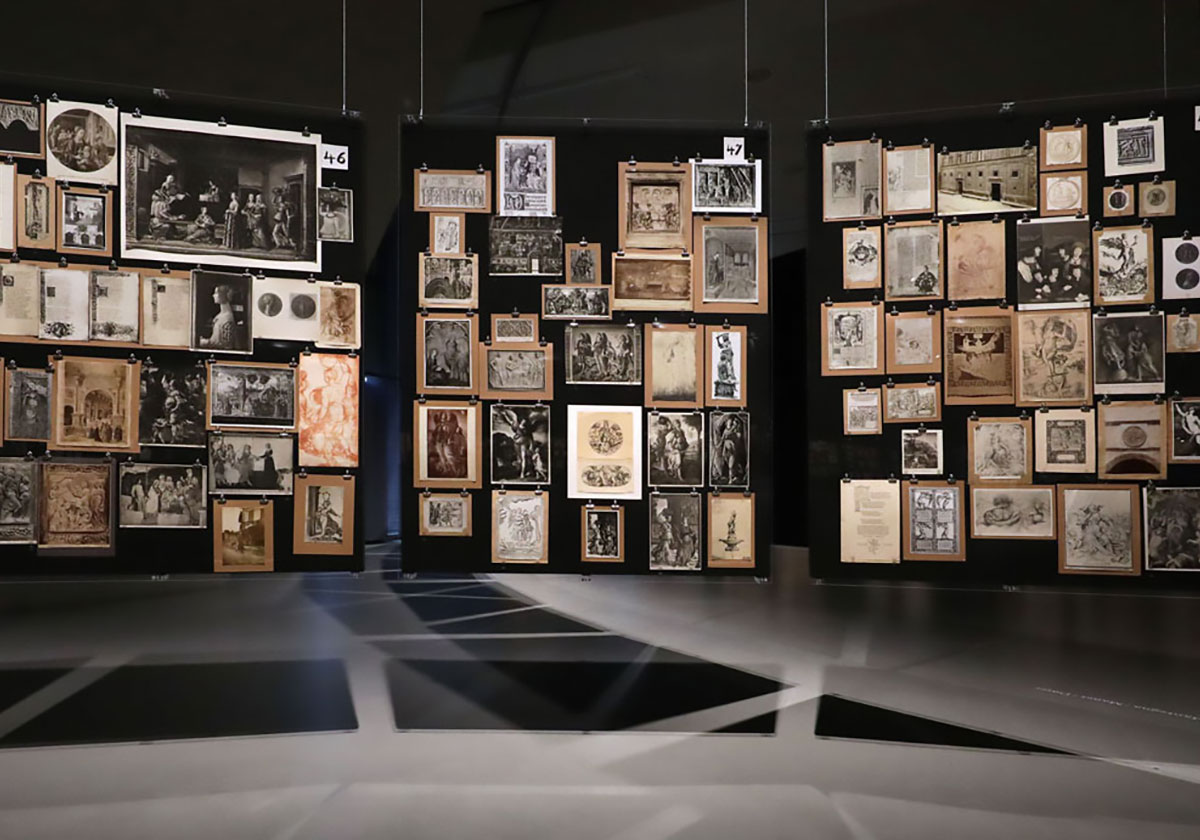
The conceptual framework of Time Regained draws from the work of the German cultural historian Aby Warburg and his unfinished Mnemosyne Atlas (1924–1929). Rather than organising history chronologically, Warburg assembled images from different periods and cultures into constellations that revealed recurring gestures, emotions, and visual motifs. His atlas proposed that images do not belong to a single historical moment but migrate across time, acquiring new meanings through their continual circulation.
Graindelavoix
At the centre of the exhibition, the Belgian ensemble Graindelavoix developed a reinterpretation of Warburg's methodology. Instead of working with images, the ensemble translated Warburg's principles into the field of early music, which is a focus of the ensemble. Medieval and Renaissance repertoires were approached not as historical artefacts to be faithfully reconstructed but as living materials that evolve through performance, transmission, and reinterpretation.
Our Research
Taking Graindelavoix's approach as a point of departure, we asked how Warburg's methodology could be translated into choreography, listening, and embodied performance. Rather than focusing on images or historical repertoire, our research follows the circulation of voices and embraces the openness of interpretation that emerges in the present moment of the spectator's encounter with the work.
Throughout the research process, we also worked in the company of Hildegard von Bingen as an imagined collaborator. Rather than approaching her as a historical figure to be reconstructed, we are interested in her ways of understanding the world and in the forms of transmission present in her writings, compositions, and visions. In her accounts, the voice of God speaks through her, placing her in a complex position where author, medium, body, and channel of transmission coexist without ever fully coinciding. From this figure, we began to develop methodologies based on distributed subjects, displaced voices, and forms of presence that never entirely coincide with themselves.
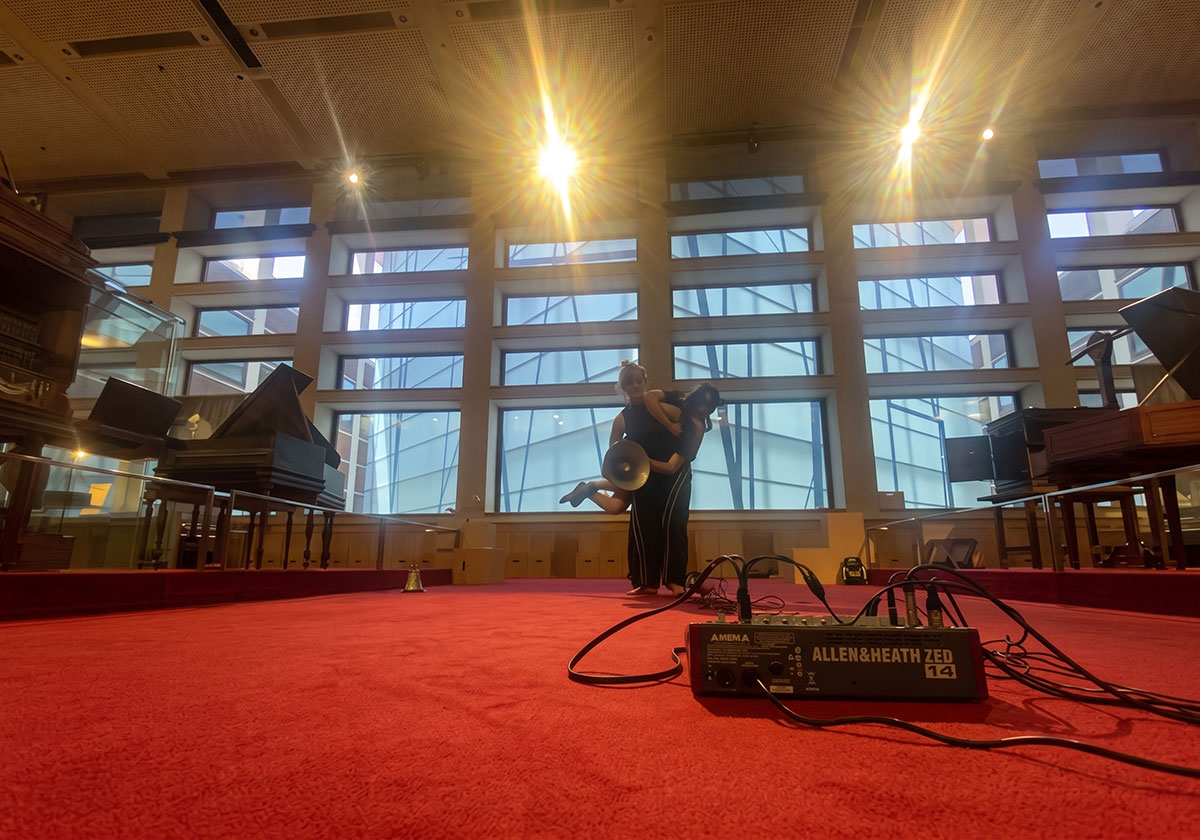
(our) Temporary Exhibition is situated in a part of the museum that is surrounded by the museum's collection of historical instruments.These medieval analogue instruments produce sound through the direct vibration of their material bodies; the source of the sound and the sound itself remain inseparable. In contrast, our performance operates through an acousmatic digital sound system in which sound is detached from its source.
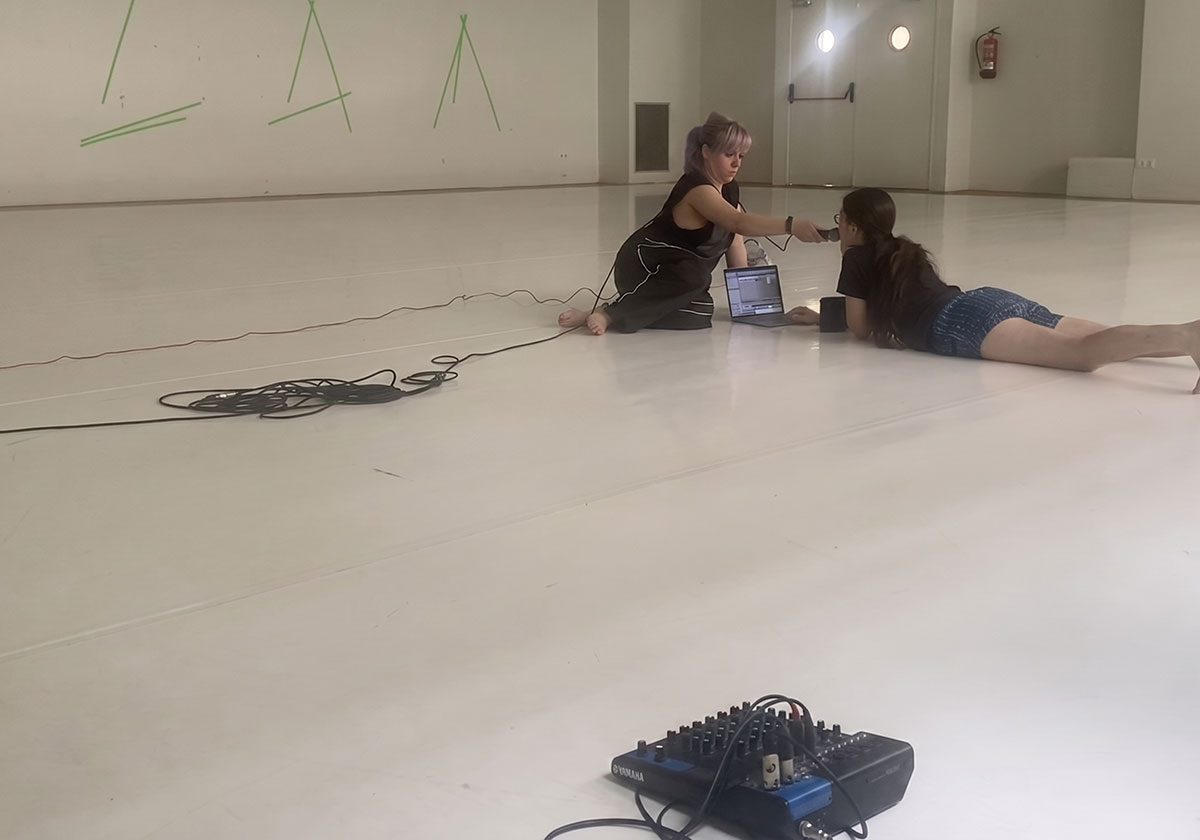
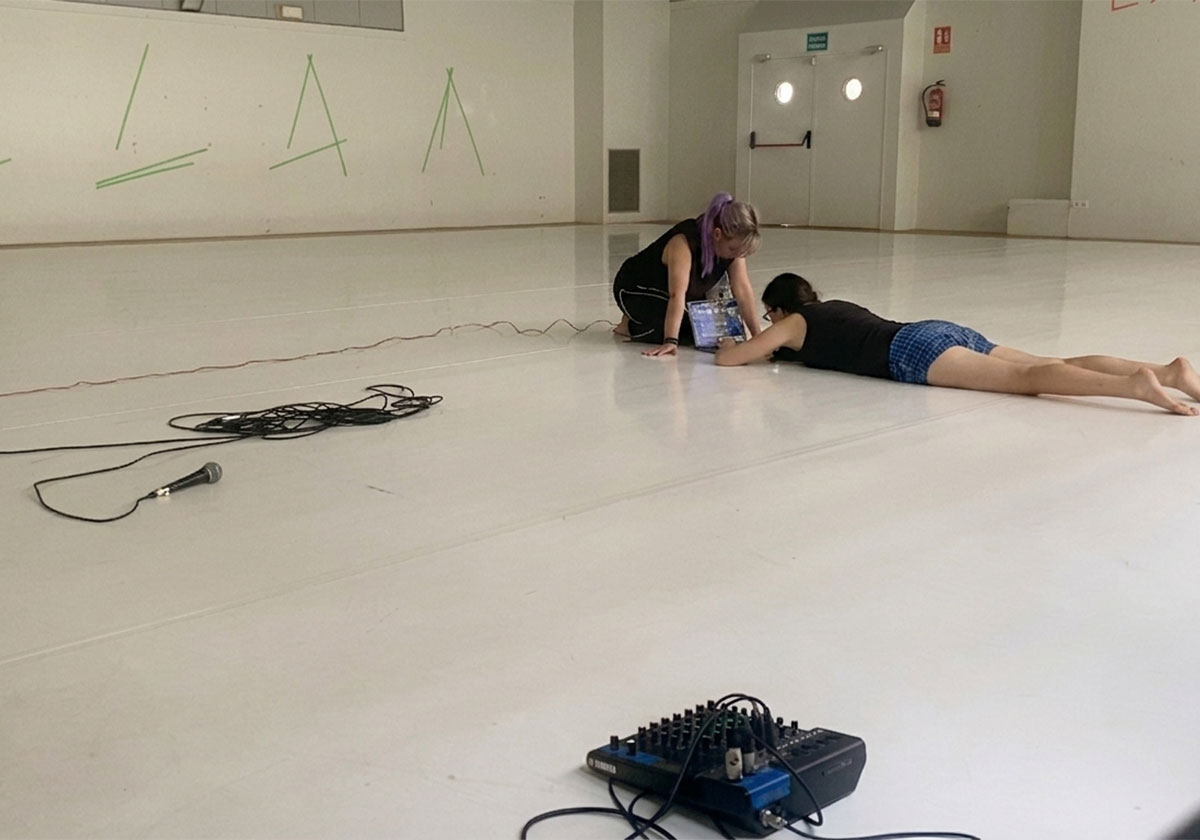
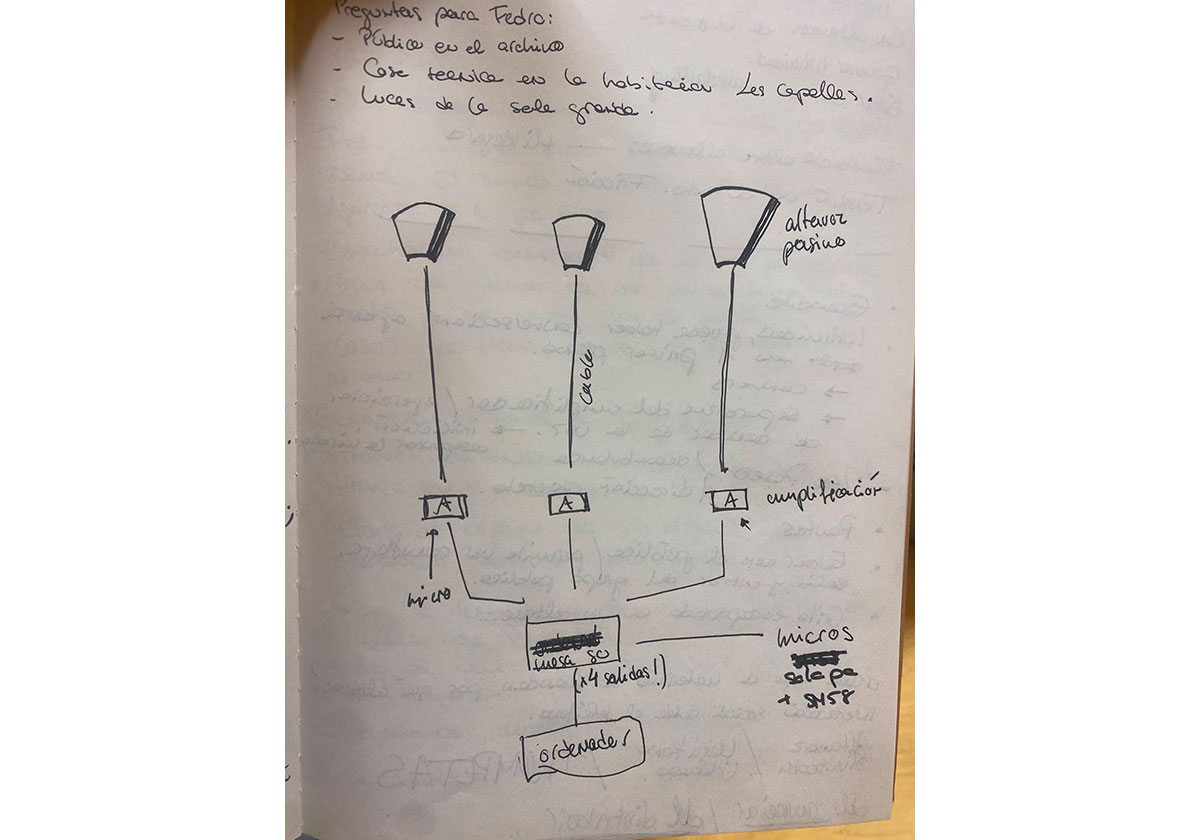
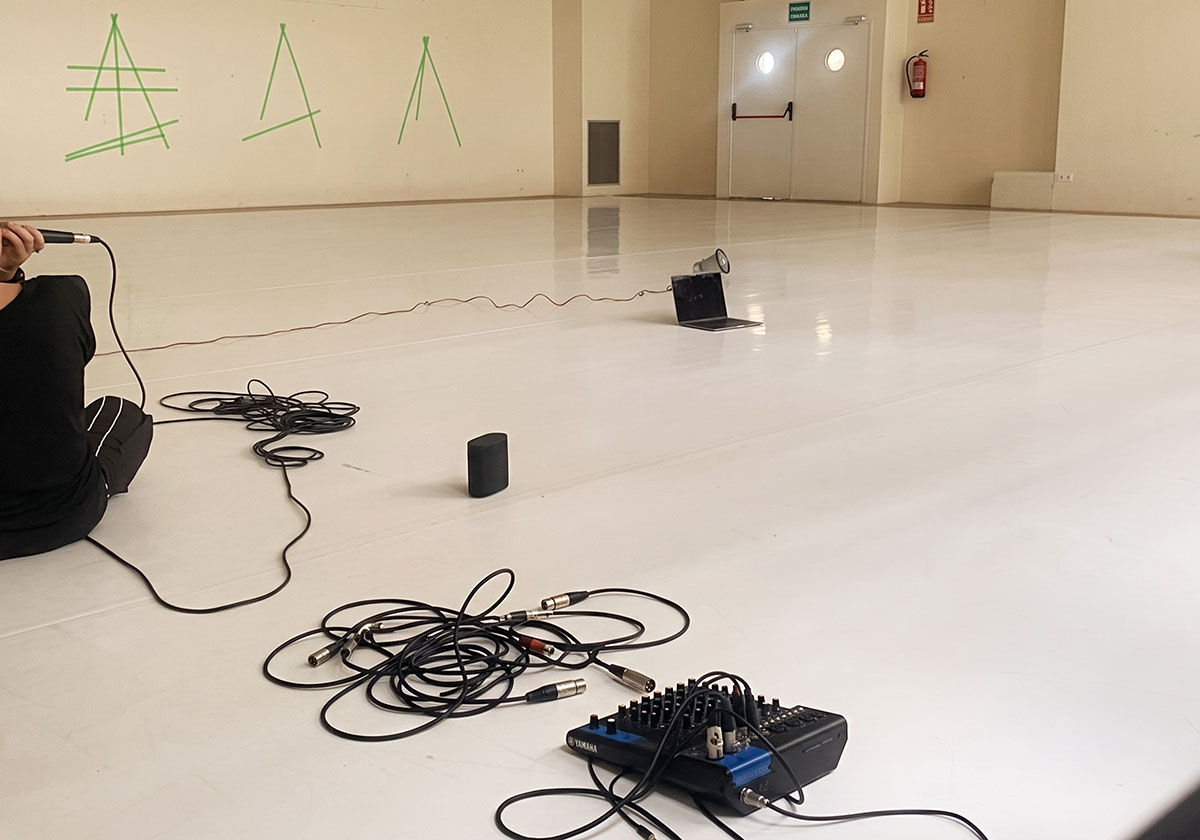
The performers move through different extended and open-ended physical actions while moving 3 horn loudspeakers through the space. Recordings of a voice are processed and distributed across a shifting network of loudspeakers, allowing the voice to appear, disappear, migrate, and occupy multiple locations simultaneously. The recordings are intentionally recorded (and lightly transformed) in such a way that they resist fixed interpretation, remaining ambiguous in what, or whom, they reference.
Our bodies remain in continuous dialogue with these migrating sounds. Movement does not illustrate the voice, nor does the voice accompany movement; instead, both operate as parallel systems that continually affect and transform one another. As voices circulate through the space, bodies generate new images, relationships, and modes of listening, producing a choreography in which sound, movement, and technology are understood as coexisting agents within a shared ecology of transmission.
Concept, choreography, performance: Júlia Rúbies Subirós & noela covelo velasco Contextual framework: Commissioned in relation to Graindelavoix reinterpretation of Aby Warburg’s Atlas Mnemosyne Dramaturgy: Fernando Gandasegui Acknowledgements: Tessa Hall Guest collaborator: Hildegard von Bingen Production: Museu de la Música de Barcelona, La Caldera, ICUB Creació i Museus (Generalitat de Catalunya) Premiere: GREC Festival de Barcelona 2026
DATES
July 2026
Premiere. GREC Festival - Museu de la Música / Barcelona
Fall 2026 - Early 2027
Presentation at Museu de la Música / Barcelona